
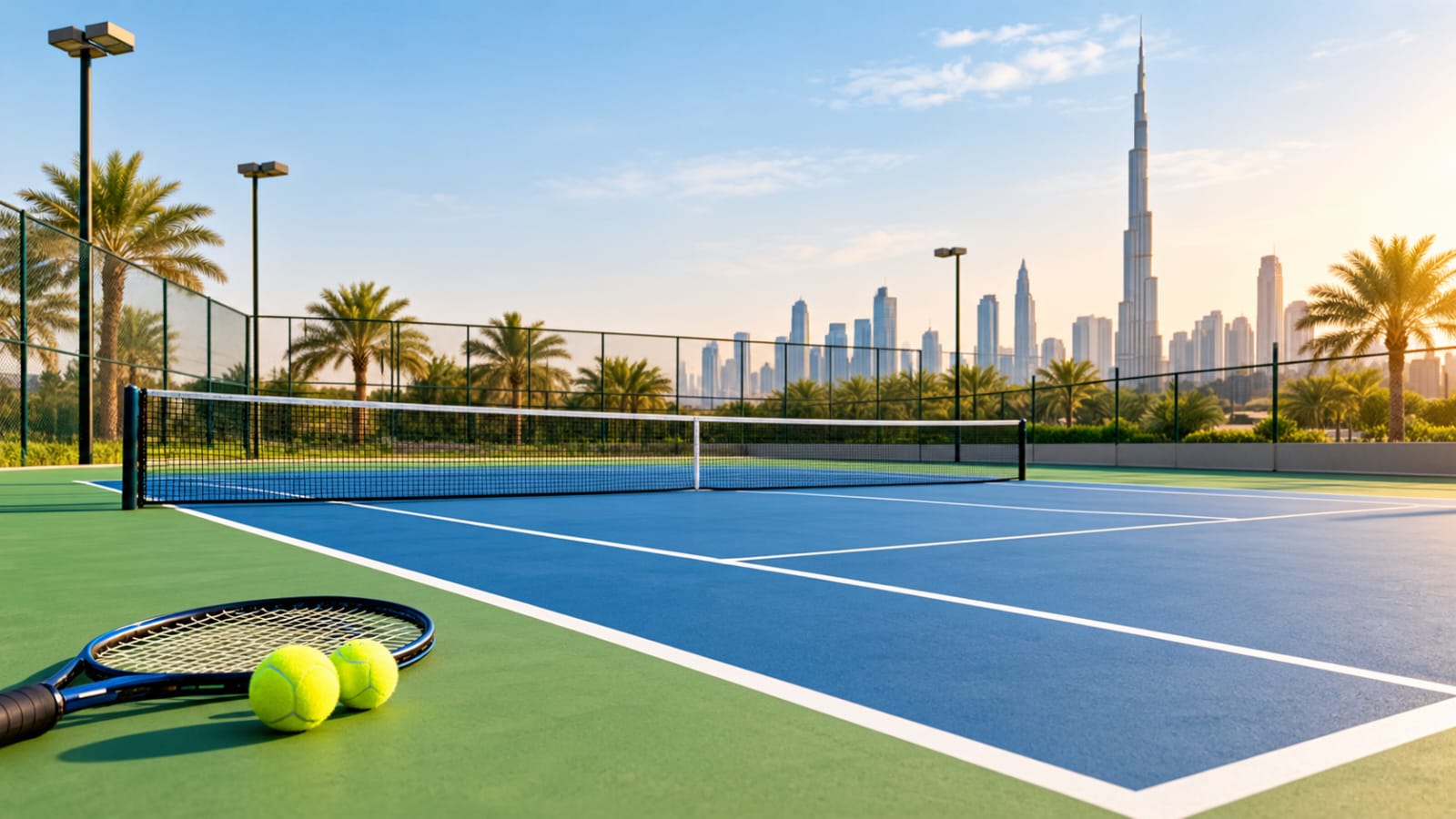
Having enough space for a tennis court is only the first step. A court can look perfectly finished when it is handed over, yet poor ground preparation or weak drainage may start showing later as cracks, low spots or standing water. That is why tennis court construction in UAE needs to begin with the site itself, not just the colour or type of playing surface. Heat, dust, strong sunlight and occasional heavy rainfall all affect how the court should be built and maintained.
Start With the Ground Below the Court
Before any surface coating is applied, the ground needs to be cleared, levelled and compacted properly. This creates a stable base for the layers above it.
One important layer is the sub-base, which is the compacted supporting layer beneath the court structure. It helps spread loads evenly and reduces movement below the finished surface. If this layer is weak or uneven, small defects can later appear as cracks or depressions. Similar ground preparation is also important for artificial sports field installation in UAE, where the underlying base needs to provide a stable foundation for the finished surface.
The finished court also needs the correct fall. This is a slight, carefully planned slope that allows rainwater to move towards drainage points instead of staying on the playing area. Even a court that appears flat to the eye normally requires this controlled gradient.
If water keeps collecting in the same corner after rain, the issue may not be the top coating at all. It can indicate poor levels below the surface or an ineffective drainage route.
Choose the Surface Based on Actual Use
Surface selection should depend on who will use the court and how often it will be played on.
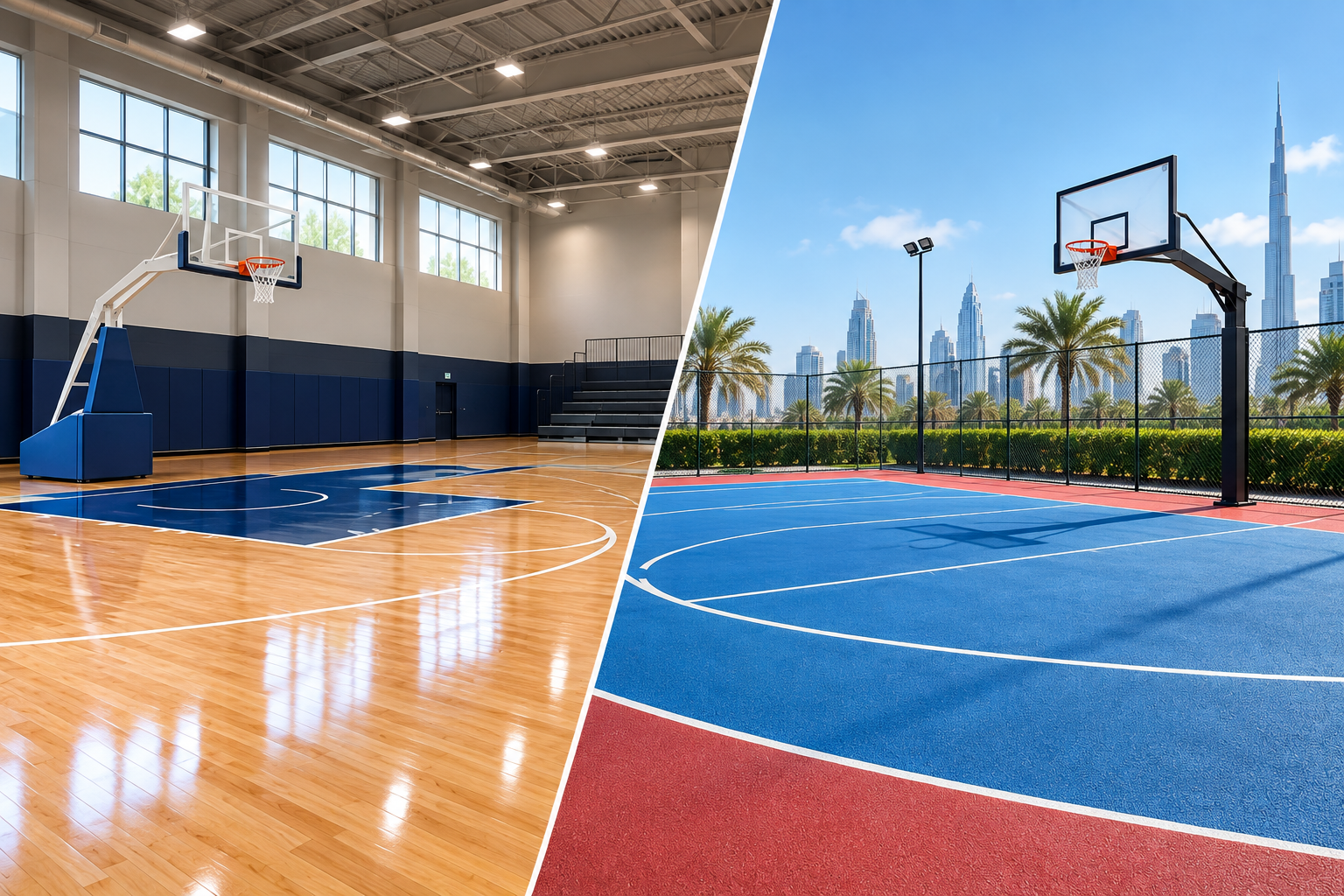
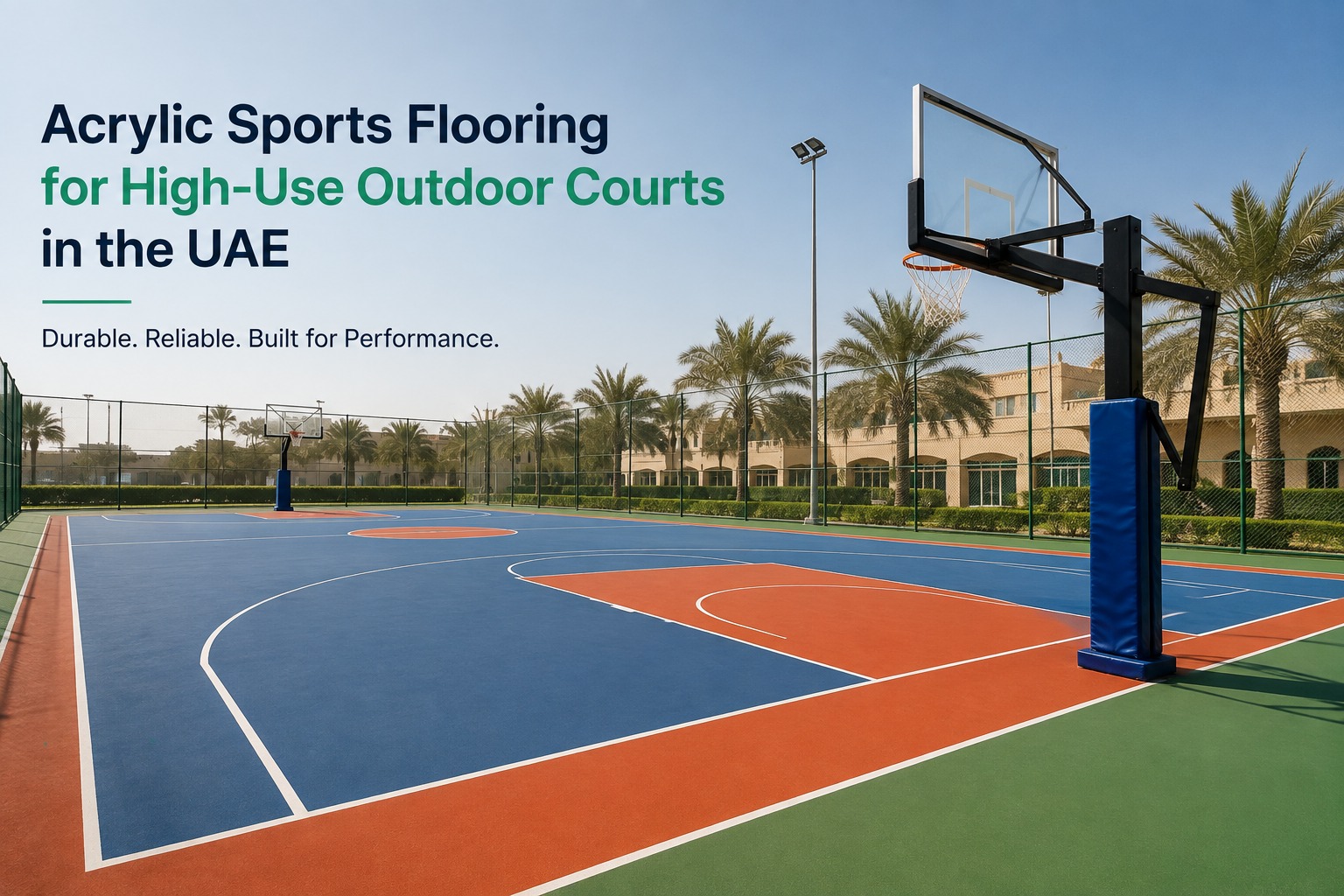
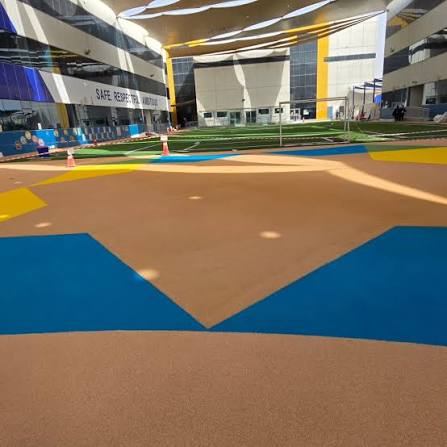
Acrylic hard courts are commonly chosen for schools, clubs and residential developments where consistent ball response and straightforward maintenance are important. The system normally uses several coating layers over a prepared concrete or asphalt base.
Cushioned acrylic courts include an elastic layer below the final playing surface. This provides more impact absorption and can make frequent play more comfortable, particularly in training facilities or clubs with long daily playing hours.
Artificial clay offers a softer playing character and can suit projects that want a clay-style experience without maintaining a natural clay court. Synthetic turf may also be considered for recreational facilities where a softer appearance and different ball behaviour are preferred.
A private villa court used a few times a week does not necessarily need the same surface system as a busy academy. Similar thinking applies to larger sports field construction in UAE, where usage levels and maintenance capacity should influence the system chosen.
Drainage Should Be Planned Before Surfacing
Rainfall may not be frequent throughout the year, but short periods of heavy rain can quickly expose poor court levels.
Water needs a clear route away from the playing area. The court gradient, surrounding levels and drainage channels should therefore be planned together. Drainage channels must also remain accessible for cleaning because sand, leaves and other debris can restrict water flow over time.
Another issue to watch for is ponding, which means water remaining in shallow areas after the rest of the court has started drying. Repeated ponding can interrupt play and may gradually affect the surface finish.
Drainage is much easier to correct during construction than after fencing, coatings and surrounding works have already been completed.
Design for UAE Heat, Sun and Dust
Outdoor courts in the UAE spend much of the year under strong sunlight. Surface materials should therefore be suitable for prolonged UV exposure and high temperatures.
Dust is another practical concern. Fine particles left on an acrylic surface can reduce grip and become abrasive when players repeatedly move across them. Regular sweeping or suitable surface cleaning helps protect both playing quality and the finish.
Projects requiring sports netting in UAE should plan the containment system alongside the court layout. Netting height, post positions and surrounding clearances affect how comfortably the space can be used. Leaving these decisions until the end can create awkward post locations or insufficient run-off space around the court.
Deal With Small Problems Early
Routine maintenance does not need to be complicated. What matters is checking the court consistently.
Loose sand and debris should be removed. Drainage outlets need to remain clear. Surface cracks, worn areas and faded line markings should also be inspected before they become larger repair jobs.
Cracks deserve particular attention. Applying a new coating over a crack caused by movement below the base may only hide the problem temporarily.
At some stage, the court may require tennis court resurfacing. Depending on its condition, this can involve repairing damaged areas, preparing the existing surface and applying new coating layers. A full rebuild is not always necessary, but the condition of the base should be checked before resurfacing begins.
Build for the Way the Court Will Be Used
A school, hotel, residential community and professional training centre will each place different demands on a tennis court. Usage frequency, player level, drainage conditions and realistic maintenance capacity should all be decided before the surface system is selected.
When working with providers of general sports solutions in UAE, look beyond the visible finish. Ground preparation, drainage, surface selection and maintenance planning have just as much influence on long-term performance. Getting those decisions right at the start is far easier than dealing with cracks, standing water or premature wear after the court is already in use.
Planning a new tennis court or reviewing an existing facility? Smart Field Sports can help you assess the surface, drainage and supporting requirements before you move ahead.