
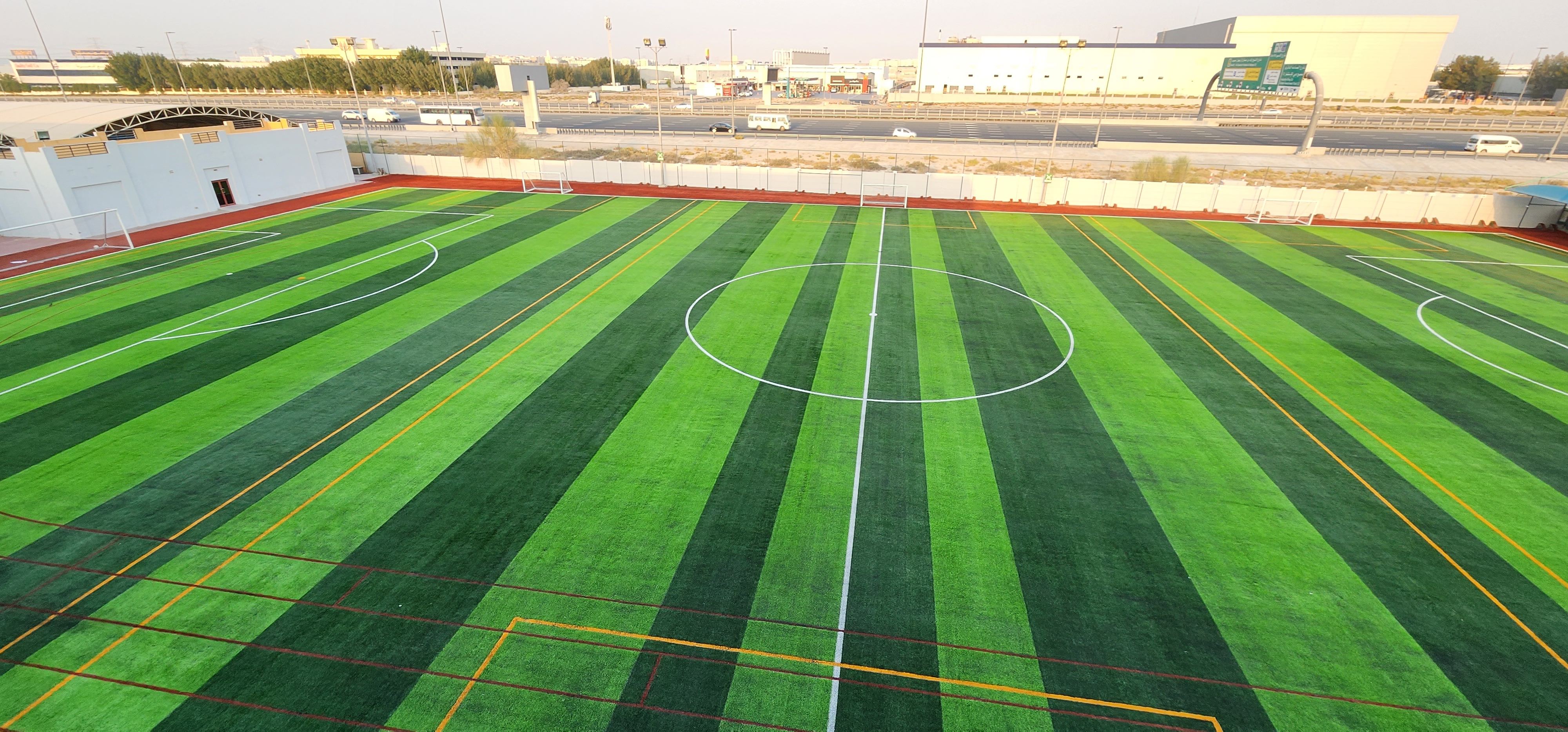
Building a football field is not a decision most organisations make twice. Once the project is approved, every choice affects how the pitch performs over the next 8 to 10 years. That is why many schools, football academies, sports clubs and developers aim for a FIFA Quality football field with artificial turf. It provides a recognised benchmark for performance, safety and durability. Reaching that standard, however, takes far more than selecting a turf product. The work beneath the surface is just as important as the surface itself.
What makes a football field FIFA Quality?
When a football field falls short of expectations, the issue is rarely the artificial turf alone. In many cases, the problems begin much earlier, during planning and construction.
A FIFA Quality football field is built as a complete system. The foundation, drainage, surface layers and installation all influence how the pitch performs once it’s in use. Missing or compromising any one of these stages can affect player safety, ball behaviour and the long-term durability of the field.
How to Build a FIFA Quality Football Field
Several factors come together to determine how the finished pitch performs. The field needs to be planned around its intended use, the ground prepared correctly and an effective drainage system put in place before the artificial turf is installed. The turf system can then be selected and installed based on the demands of the facility
Start With How the Field Will Be Used
The construction requirements for a school football field will not always be the same as those for a professional academy or sports club. The expected number of playing hours, level of activity and type of users should be considered before construction begins. These factors help determine the right field design, turf system and construction specifications.
Prepare the Ground Properly
A good playing surface starts below the turf. The site needs to be properly prepared, levelled and compacted before the sub-base is installed. A stable and well-built foundation helps prevent uneven areas, movement and surface problems that can develop over time.
Plan Drainage Before Installing the Turf
Water needs to move away from the playing surface quickly and efficiently. The drainage system should be planned as part of the field construction rather than treated as an afterthought. Proper grading, drainage layers and suitable outlets help prevent water from collecting on the pitch and keep the field usable after rainfall.
Choose a Turf System That Suits the Field
There is no single artificial turf system that suits every football facility. The right choice depends on factors such as playing frequency, expected foot traffic, climate and the level of performance required. For an artificial turf football field in UAE, the turf system should also be selected with local weather conditions and long-term use in mind.
Install the Turf to the Required Standard
Even a high-quality turf system can underperform if it is not installed correctly. The turf needs to be properly positioned, joined and secured, with seams, infill and finishing details handled carefully. Good installation helps maintain a consistent playing surface and allows the turf system to perform as designed.
Protecting the Field’s Performance Over Time
Once a football field is in regular use, small changes in the surface condition can appear gradually. These changes are usually seen first in areas that receive the most activity, such as goal areas, training zones and frequently used sections of the pitch.
In most facilities, these are the areas where wear becomes visible first. Monitoring how the surface responds in these zones gives a clearer picture of the field’s overall condition.
Proper maintenance after installation is essential for keeping the performance of an artificial turf football field in UAE over the long term.
Working With the Right Sports Field Partner
A football field project involves many decisions that influence how the surface performs after completion. Having the right partner involved from the planning stage helps ensure those decisions are made with the field’s intended use, location and long-term performance in mind.
From selecting the suitable artificial turf system to managing the installation process, each stage requires attention to detail. An experienced sports field provider understands how different elements of the project work together and helps create a surface built for consistent use.
When developing a FIFA Quality football field in UAE, working with a team that understands sports infrastructure can make a significant difference in the outcome.
Building a Field That Delivers Long-Term Value
A FIFA Quality football field is built through careful decisions made at every stage of the project. The planning behind the field, the work beneath the surface and the choice of turf system all influence how the pitch performs long after installation.
For organisations planning a football facility in the UAE, the right support during these stages can make the process more straightforward. Smart Field Sports works with clients to develop sports surfaces that match the requirements of each project, from initial planning through installation.
A well-planned field is not only ready for the first match. It is built to support players and facilities for years to come.
Looking for the right team to bring your sports field project to life? Connect with